Description
In the past, ceramic objects sought to transform themselves into pure sculptural expressions by sealing the openings of vessels and eliminating their utility.
Today, however, as functional vessels increasingly become objects of aesthetic appreciation, jars and vases also exist in museums and galleries as objects that remain unused, despite retaining their original functions.
Forms originally created for practical purposes are thus detached from their utility precisely because of their sculptural value.
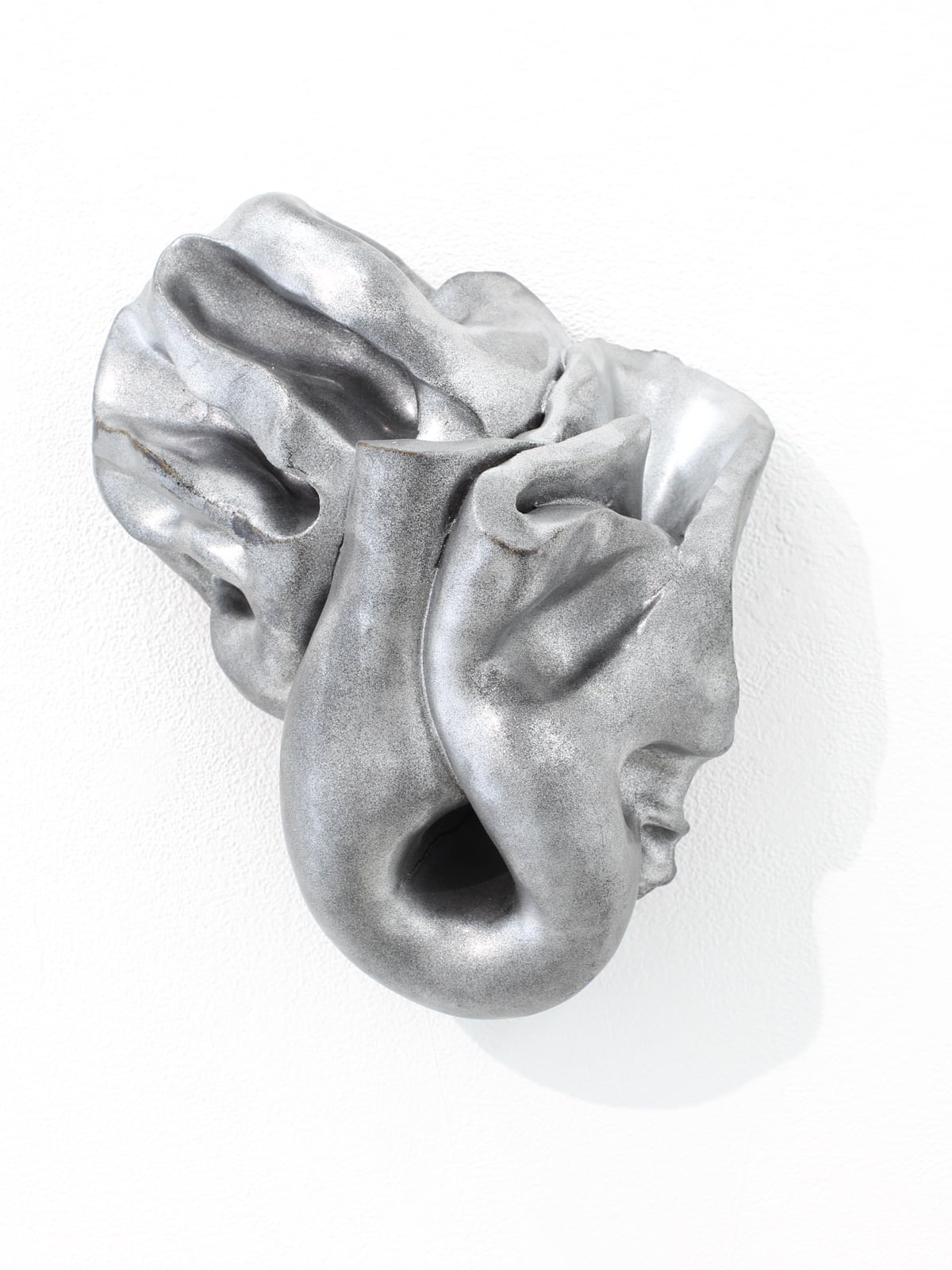
This work portrays this seemingly ironic condition by manipulating the structure of the vessel itself.
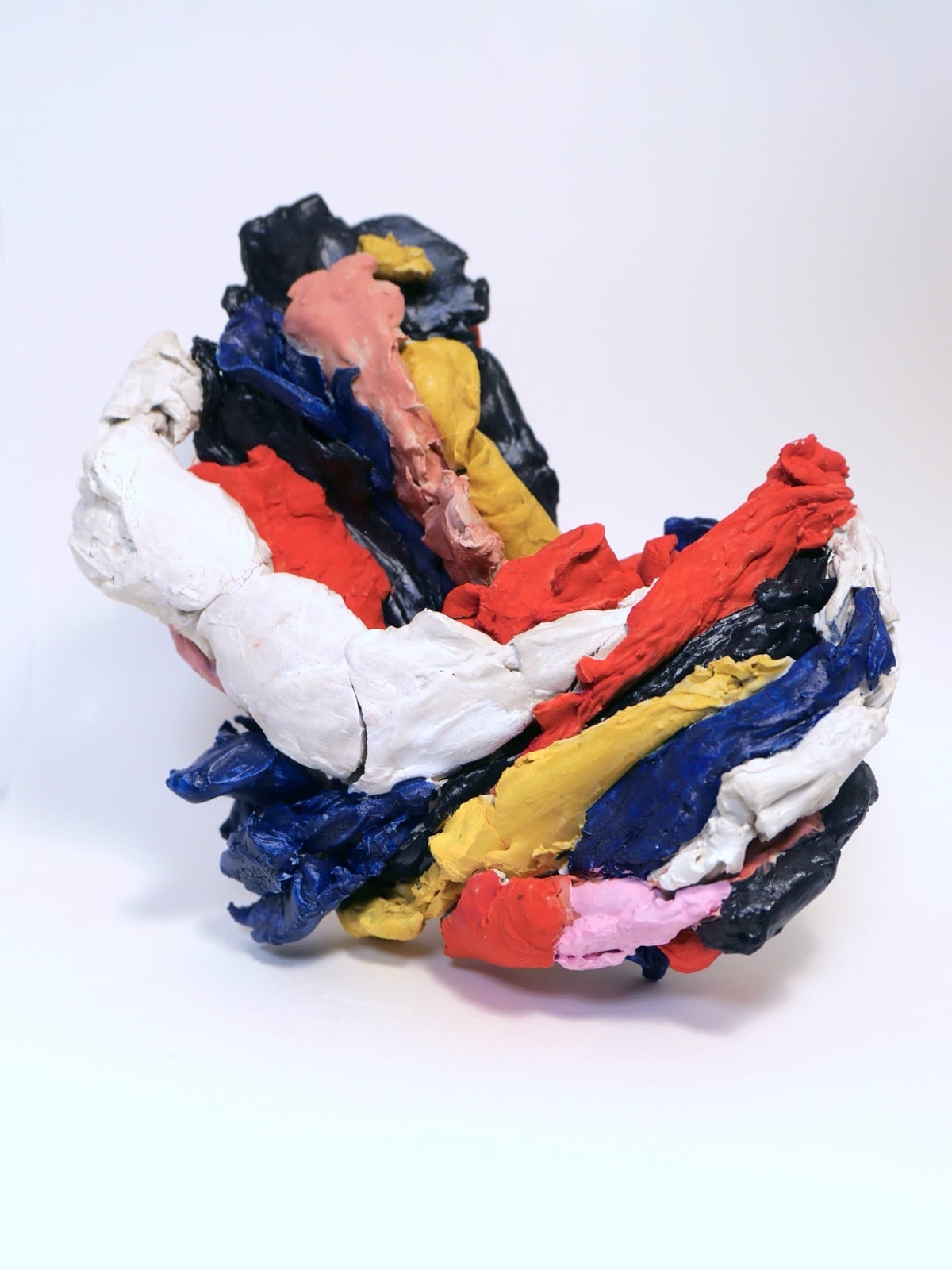
The base, which enables the vessel to function, is raised from within and inverted toward its opening. Once serving to support its contents, the base becomes exposed to the outside, transforming into a decorative form. The vessel thereby loses its utility through its own structure.
The work questions what meaning ceramics, deprived of their utility, can hold in the contemporary world.
説明
かつて陶のオブジェは、器の口を塞ぎ、用途を断つことで純粋な造形表現への転換を試みた。
しかし、用途を持つ器が鑑賞の対象となりつつある現在、壺もまたその用途を保持したまま、美術館やギャラリーにおいて使用されないオブジェとして存在している。
用途のために生まれた形態が、その造形的な価値ゆえに用途から切り離される。
本作は、このアイロニカルとも言える状況を、壺の構造そのものを操作することで肖像化する。
壺の機能を成立させる底面を内側から立ち上げ、口縁部へと反転させる。かつて内容物を支えていた底面は、外部へ露出することで装飾的な形態へと変容し、壺は自らの構造によってその用途を失う。
現代において用途を失った陶はどのような意味を持ちうるのかを問う。